
Shocking Reports from STATE SURVEILLANCE UNIT
Source: https://hfwcom.karnataka.gov.in/
Chikungunya prevention in Karnataka is urgent. The virus causes fever and severe joint pain, spreading through day-biting Aedes mosquitoes.
 Karnataka reports 70% of cases from indoor bites, proving that homes are the frontline.
Between 2020 and 2024, monsoon seasons saw a 30% increase in cases, with hotspots in Mysuru and Mandya. In 2023, one village outbreak hit 200 people—all because doors were left open.
As Dr Rajesh Kumar notes, “Chikungunya hits hard in humid areas like ours.” Climate change only fuels mosquito breeding.
What invites Chikungunya in South Karnataka?
The reality is that traditional Chikungunya prevention in Karnataka often falls short.
The Aedes mosquito breeds in clean, stagnant water such as that found in pots and tyres and bites mainly during the day, making unscreened homes especially vulnerable. Sometimes, the simplest solutions turn out to be the smartest.
Why mosquito net doors and window insect screens?
Repellents wear off, and coils are ineffective outdoors.
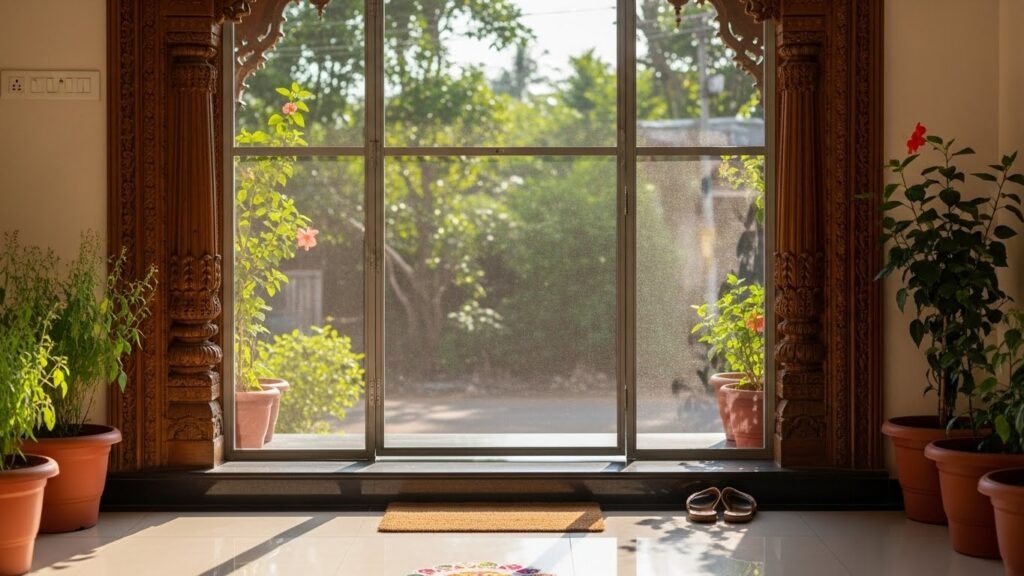
Installing mosquito net doors and window insect screens creates a vital physical barrier, breaking the chain of transmission right at your home’s entry points.
Your Action Plan for a Safer Home
Fine mesh doors block insects while letting air flow. Want screens that last? Pick solar screens. They’re tough enough for big spots like patios, balconies, and French doors!
The steps are simple:
Spot gaps in doors—remember, 60% of bites happen indoors.
Choose fibreglass mesh or Velcro window insect screens for rental spaces.
Pair with HVLC fans for comfort.
Drain water weekly. As one health worker says, “Nets alone help, but full routines save lives.”
For windy apartments, insect screens designed to withstand high wind pressure provide better stability.
Book your free home visit for quotations.
A simple mosquito net door is a powerful tool to stop the bite cycle at its source.
Phifer’s Eco-Friendly Promise: A Win-Win for You and the Planet
Our commitment isn’t just to you—it’s to the environment, too. Here’s how our products deliver for both:
Over 70+ Years of Expertise: Phifer brings decades of wire drawing experience, crafting products for both traditional and specialised applications.
Mastery in Weaving: The company has steadily expanded its weaving expertise, creating a wide range of innovative woven fabrics.
Interior Sun Control Fabrics: Designed to reduce heat indoors, these fabrics help keep homes and offices cooler and more comfortable.
Exterior Sun Control Fabrics: Built for outdoor use, these fabrics cut down heat at window areas, protecting spaces from harsh sunlight.
Commercial Applications: Businesses benefit from Phifer’s sun control solutions, lowering cooling costs and improving energy efficiency.
Residential Comfort: Homeowners enjoy cooler living spaces and reduced glare, thanks to Phifer’s advanced fabric technology.
Long-Term Strategies for Community Health
Mysuru’s 2024 campaign educated 1,000 families. Karnataka aims to screen 50% of homes by 2026. Community drives and surveillance groups can amplify impact.
Don’t wait for the bite to take action. Install balcony insect screens in Karnataka today to guard your family’s health.
Source info: https://hfwcom.karnataka.gov.in/uploads/45%20IDSP%20Weekly%20Infectious%20Diseases%20Report_1762950107.pdf