
Picture a busy hospital ward. A patient is recovering, only to be bitten by a mosquito that slipped through an open window. This single bite could spark a new dengue crisis within the very walls meant to provide healing.
With global dengue cases surging, hospitals are paradoxically high-risk zones. The solution? A simple, yet powerful line of defence: mosquito screens for hospitals. This isn’t just about comfort; it’s a critical component of dengue prevention in hospitals.
Installing specialised hospital window insect screens and balcony mosquito screens creates a chemical-free barrier, protecting vulnerable patients and staff.
It’s time to install Phifer aluminium screens in hospitals and upgrade hospital windows with crease-fit ditto screens as a fundamental part of dengue outbreak control.
The Growing Dengue Risk in Healthcare Settings
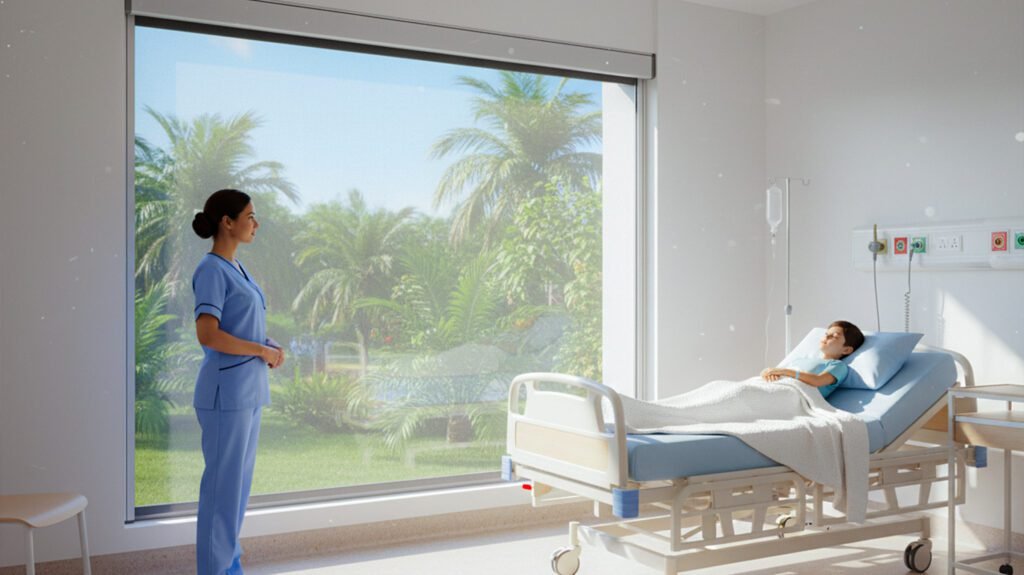
Hospitals are high-risk zones. Crowded rooms, poor airflow, and open doors invite mosquitoes. Medical facility insect screens block entry points without blocking fresh air—essential for patient comfort and safety.
Key Statistics on Dengue Impact
Over 400 million infections yearly (CDC)
5 million cases in Southeast Asia in 2023
Hospital-acquired infections rose 15% in outbreak zones.
Why Hospitals Are Prime Targets
Open doors during patient transfers
Vents and gaps allow mosquito entry
Immunocompromised patients are more vulnerable.
A Real-World Example from India
In 2022, a Mumbai hospital saw 50 dengue cases in one month. The culprit? Unscreened windows. After installing screens, cases dropped to zero within weeks.
How Mosquito Screens Work to Stop Dengue
Fine mesh screens act as barriers against Aedes mosquitoes. They allow airflow while keeping bugs out—no chemicals needed.
Types of Effective Screens
Phifer aluminium screens: Best outward visibility, durable coating, weather-resistant
SeeVue stainless steel screens: Tougher mesh, sharper view, ideal for high-traffic areas
Polyester screens: Easy access for staff, great for sliding mosquito screens for hospital balconies
Recommendations for Window Insect Screen FramesTrim Glide Fit: Budget-friendly for small balconies
Ace Window Fit: Premium fitment for hospital windows
Simple Installation Steps
Measure windows and doors
Fit frames with clips or screws
Test for gaps and seal them
Key Benefits for Hospitals Using Screens
Protects patients and staff
Reduces infection rates
Cuts long-term costs
Meets health regulations
Actionable Tip: Check screens daily for tears.
Saving Money and Resources
One-time install vs. costly outbreak treatments
A Brazilian clinic saved $20,000 annually.
Quick ROI, less staff sick time
Improving Compliance and Image
Meets CDC vector control guidelines
Builds patient trust
Success Stories
Tan Tock Seng Hospital, Singapore (2024): Installed screens during dengue peak. Infections fell 75%. Staff training ensured long-term success.
Challenges and Solutions
Cost: Start with wards
Maintenance: Monthly cleaning
Tip: Partner with local suppliers for custom fits
Steps to Get Started
Map mosquito entry points
Review outbreak data
Survey staff
Choose UV-resistant and magnetic options
Get vendor quotes
Inspect quarterly, train teams, track results
Recommendations
These window insect screens and balcony mosquito screens are key to dengue prevention in hospitals and building dengue-safe hospital infrastructure.
From Phifer aluminium screens to SeeVue stainless steel screens, modern solutions offer more than just bug-blocking—they’re part of a smarter, safer hospital design.
Whether you’re looking to install Phifer aluminium screens in hospitals, SeeVue stainless steel mesh for clinics, or Trim Glide Fit for hospital balconies, the options are practical and proven.
You can purchase Ace Window Fit mosquito protection, upgrade hospital windows with crease-fit ditto screens, or shop Phifer Classic door-fit insect screens for a tailored fit.